
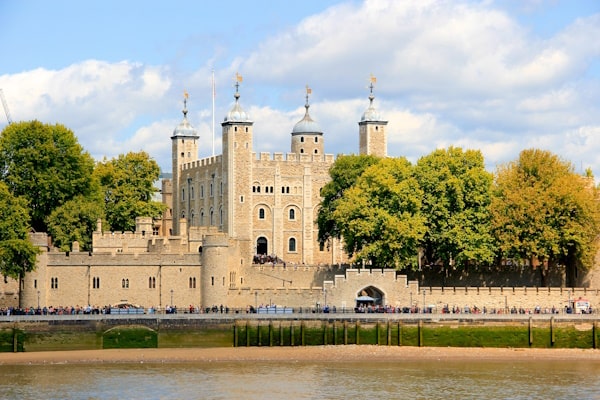
Tudor history tours bring one of England’s most dramatic periods to life in the places where its stories unfolded. Five hundred years on, and Tudor England still has a remarkable hold on the imagination.
At Travel Editions, we’ve been exploring this period with our travellers for years, and the appetite shows no sign of slowing. In fact, it’s growing. Our Anne Boleyn: Life and Legacy tour regularly sells out months in advance. Rebel Queens, tracing the women who challenged Tudor power from Hever Castle to the Tower of London, now has a waiting list. The Real Wolf Hall, following Hilary Mantel’s world through the landscapes of Gloucestershire and the Cotswolds, remains one of our most talked-about journeys. And our Richard III tour continues to draw those fascinated by one of England’s most debated monarchs — especially since his extraordinary rediscovery beneath a Leicester car park in 2012.
These aren’t simply visits to historic sites. They are stories told in the places where they unfolded — with the added depth of expert guidance that changes everything you think you know.
Why Tudor England still grips us
Part of the answer is obvious: the drama is extraordinary.
In just over a century, England broke with Rome, executed queens, endured a boy king, navigated disputed successions, and ended with Elizabeth I — daughter of Anne Boleyn, the queen Henry VIII had beheaded. It is a narrative so improbable it would feel over-written in fiction.
But there is something else, too. The Tudor world feels unexpectedly close. Power and image, performance and truth, ambition and reinvention — these are not distant historical concepts. They feel recognisable. The personalities may be long gone, but the dynamics still resonate.
That sense of familiarity is part of what makes standing in Tudor spaces so powerful.
The Historic Places Visited on Our Tudor History Tours
One of the great privileges of exploring Tudor England is how much of it survives in physical form.
You can stand in the rooms at Hever Castle where Anne Boleyn spent her childhood. You can walk through the cloisters of Lacock Abbey, unchanged since the dissolution of the monasteries. You can look out from Berkeley Castle, where Henry VIII and Anne Boleyn both stayed, and see a Gloucestershire landscape that would feel instantly recognisable to them.
This is what transforms Tudor history from something read into something experienced.
And it becomes even more vivid with the right expertise. On our tours, historians don’t simply recount events — they interpret the spaces themselves, helping you understand what you are really looking at.
At Hever, Dr Owen Emmerson — former Castle Historian and Assistant Curator and consultant on the BBC’s Wolf Hall — brings the Boleyn story into sharp focus inside the surviving rooms where it all began. In the refurbished Boleyn Apartment, the only extant suite lived in by the family, the past doesn’t feel distant. It feels present, structured, real.
Objects, power and the stories they carry
Tudor history isn’t only written in stone and landscape — it’s also held in objects.
Historian Dr Nicola Tallis, Fellow of the Royal Historical Society, specialises in the material culture of the Tudor court. At places like the Tower of London, she helps travellers see the Crown Jewels not simply as ceremonial regalia, but as political instruments — objects that carried meaning, authority and intention.
Once you start reading objects in that way, a room becomes something entirely different: not just a display, but a narrative in physical form.
That is the shift our tours are designed to create.
The women history almost forgot
For generations, Tudor history was told through a narrow lens — Henry VIII, Wolsey, Cromwell, More. The women appeared in the margins: wives to be replaced, daughters to be arranged, queens to be managed.
That version of the story has been thoroughly re-examined — and it is one of the reasons Tudor history feels so alive today.
Historian Dr Elizabeth Norton, trained at Cambridge and Oxford and with a PhD from King’s College London, has helped reshape understanding of Tudor queenship — not as romance or tragedy, but as political reality. Meanwhile, Julian Humphrys, historian and Fellow of the Society of Antiquaries, brings forensic depth to the dynastic conflicts that defined the period, including the ongoing reassessment of Richard III.
Our Rebel Queens tour follows these women through the places where they shaped — and challenged — power: Hever Castle, Allington Castle (offering private access), Leeds Castle, Rochester, the Guildhall where Lady Jane Grey was tried, and finally the Tower of London.
It is not always an easy history. But it is an essential one — and standing in those spaces brings it into focus in a way no book ever fully can.
What it feels like to be in the room
There is a moment that often happens on Tudor tours — when place, story and understanding finally align.
At Sudeley Castle on The Real Wolf Hall tour. In the Tower of London on the Anne Boleyn itinerary. Inside Hever’s Boleyn Apartment. Something shifts.
Travellers describe it in different ways: seeing Anne Boleyn’s Book of Hours, with her inscription still visible; standing in Berkeley Castle and realising the human reality behind events often reduced to legend; or recognising that these were not abstract historical figures, but people making decisions in real rooms, with consequences that shaped a country.
These moments don’t happen by chance. They happen because the right guide is there, the right detail is highlighted, and the group is small enough for curiosity to take its course.
Where to begin
If you are new to Tudor history — or returning to it after years of reading but not visiting — four journeys offer a compelling starting point:
- Richard III explores the life and legacy of England’s last king to die in battle, a story reshaped by archaeology and modern scholarship.
- Anne Boleyn: Life and Legacy follows her journey from Hever to Westminster Abbey to the Tower, led by expert historians including Owen Emmerson and Nicola Tallis.
- The Real Wolf Hall brings Hilary Mantel’s world into the real landscape of the Cotswolds and Gloucestershire — Sudeley, Tewkesbury, Berkeley and Lacock over four immersive days.
- Rebel Queens traces the women who challenged Tudor authority across some of England’s most evocative historic sites.
You don’t need specialist knowledge to join. You don’t need dates or dynastic charts. Just curiosity — and a willingness to see a familiar story in a completely new way.
Because Tudor England has a habit of doing that.
And five hundred years on, it still hasn’t finished.
Ellen Walker
Head of Sales & Marketing
